Sustainability and
Green Building
Making the Most of Every Tree
RedBuilt builds strength into every product through efficient design. By engineering wood to perform where it matters most, RedBuilt turns each tree into an optimized structural frame; using less material to do more, without compromising safety or performance.
That efficiency pays off well beyond the structure. Making better use of every tree lowers embodied carbon and supports environmental preservation, while building with wood enhances occupant well-being and can reduce overall project costs. The result is a stronger building and a lighter footprint, engineered from a renewable resource.

Sustainability & Efficiency
Embodied-carbon comparisons from peer-reviewed lifecycle assessments.
For more information, visit:
Mass Timber Comparative Life Cycle Assessment Series Trends and Conclusions
Introduction to Whole Building Life Cycle Assessment: The Basics
Engineered Wood: Strength Meets Sustainability
Engineered wood products are designed to make more efficient use of natural resources while delivering improved structural performance compared to traditional lumber.
Less Waste, More Efficiency
Custom-built products reduce excess material both during manufacturing and on the jobsite. And because wood stores carbon rather than emitting it in production, timber framing carries significantly lower embodied carbon than comparable steel or concrete structures.
Innovation in
Design Opportunities
RedBuilt products can contribute to innovation in design credits through:
Efficient wood fiber usage
Lower carbon footprint compared to steel and concrete
Reduced jobsite waste through Precision-End-Trim (PET) services
Optimized structural performance with less material waste
Green Building Support
RedBuilt supports project teams pursuing green building certifications by providing documentation and material transparency.
- Project-specific letters outlining green attributes
- Cost breakdowns by material type
- Documentation for LEED and other green building criteria
- Recycled content information from associated hardware
Regional Sourcing & LEED® Value
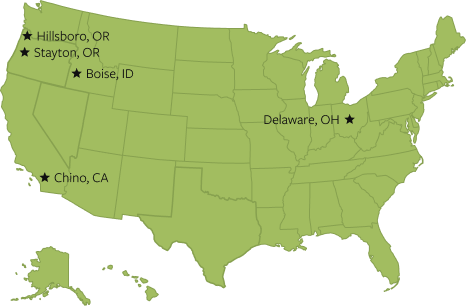
RedBuilt manufactures engineered wood products at facilities across the United States, helping project teams turn that footprint into green building value.
When your project falls within LEED’s regional sourcing radius, our products can count toward the Sourcing of Raw Materials credit, and our team provides the documentation needed to support every eligible claim.
U.S. Manufacturing Footprint
Facilities in Oregon, California, and Ohio produce Red-I™ Joists, RedLam™ LVL, and Open-Web Trusses.
LEED® Sourcing Value
Products manufactured within 100 miles of a project site can count at up to twice their value under LEED’s Sourcing of Raw Materials credit.
Eligibility, Made Clear
Regional value depends on project locale and product line. Our technical reps confirm what qualifies before you specify.
Documentation On Request
Project-specific letters detail green attributes, cost by material type, and the claims your team needs for submittal.
Renewable Material Sourcing
All RedBuilt wood products come from renewable forest resources. However, typical forest harvest cycles (30–40 years) may not qualify as “rapidly renewable” under certain green building standards.
RedBuilt products are urea-formaldehyde free
Compliant with industry standards for low-emitting materials
Safety Data Sheets are available for key products
Certifications
Environmental Product Declarations (EPDs)
Quantify the environmental impact of Red-I™ I-Joists, RedLam™ LVL, and Open-Web Trusses across their lifecycle. These meet LEED® v4 requirements and are recognized by additional green building standards.
Health Product Declarations (HPDs)
Disclose material content and associated health information for the same product lines.
SFI Chain of Custody
Verifies that RedBuilt’s wood products are sourced from responsibly managed forests, certified by the Sustainable Forestry Initiative.
Indoor Environmental Quality Compliance
RedBuilt products meet LEED requirements for low-emitting materials when:
Adhesives meet ASTM standards
No added urea-formaldehyde resins are used
Products comply with industry certification standards